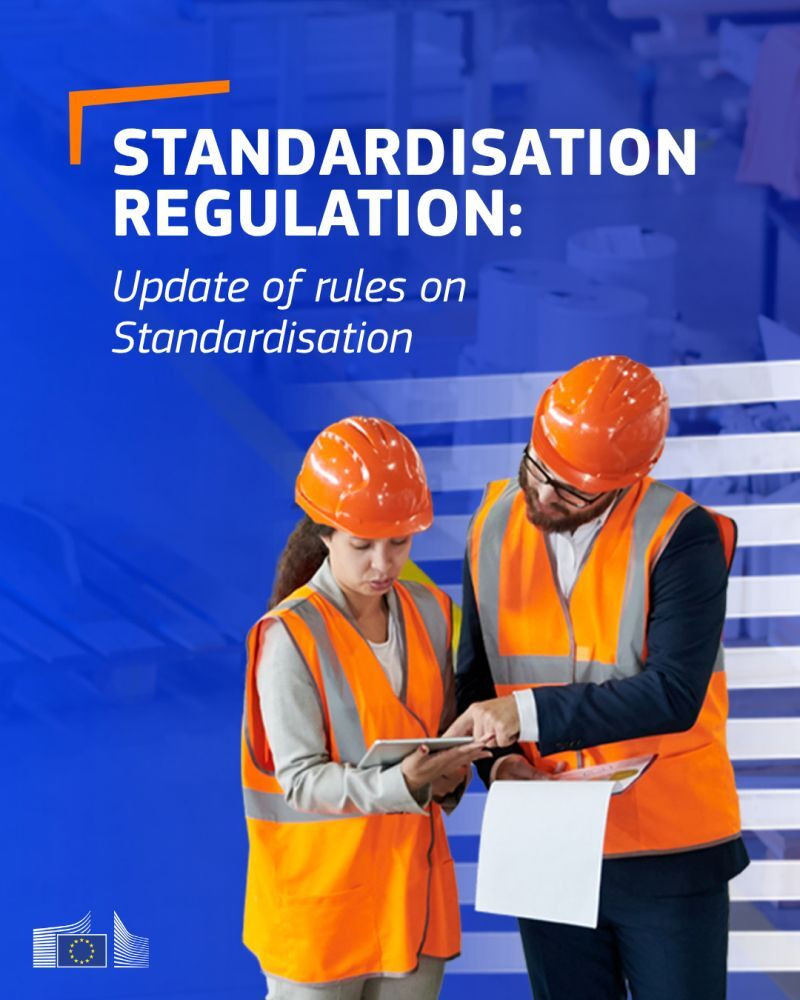
The European Commission proposed today to modernise the European standardisation system to make it faster, increase the representation of small- and medium-sized enterprises, and better equipped to support the European Union's strategic interests. Standards are essential to the functioning of the EU economy. They help ensure safety and interoperability, provide legal certainty, and enable market access across sectors ranging from clean technologies and batteries to construction products, cybersecurity and advanced manufacturing.
Harmonised European standards play a central role in helping businesses demonstrate compliance with EU legislation, reducing costs and enhancing quality and consumer trust. However, the current standardisation system faces challenges in keeping pace with rapid innovation and technological developments, which necessitate the timely development of standards.
The Commission is therefore proposing a revision of the existing legislation to make standards development more responsive while preserving its core strengths as a public-private partnership involving European standardisation organisations.
Because standards play an important role in getting products on the market, jurisdictions that invest in standard-setting are more likely to see their standards adopted at the global level. Given this geopolitical importance, the proposal also contributes to stronger Union coordination in international standardisation. This will support a more coherent approach by helping promote European interests while remaining in line with WTO principles. The Commission is also proposing to create an Expert Centre on European Standardisation to ensure stronger strategic steering, better cross-policy coordination, and closer alignment between standardisation work and EU priorities.
Next steps
The proposed measures will now be examined by the European Parliament and the Council of the European Union before their adoption and entry into force.
Read the full Press Release